Financial Engineering for the Modern Economy
We bridge a founder’s ambition to enterprise value.
Crownbridge Global is a financial engineering firm built for the modern CFO mandate. We partner with founders of lower middle market companies to build an aligned business model for their capital.
The role of the CFO is changing.
The modern CFO is no longer simply the steward of financial reporting, controls, and the balance sheet. The CFO is expected to combine financial expertise with strategic vision, disciplined execution, enterprise-wide leadership, and sophisticated capital allocation to fuel the company’s next stage of growth.
But having the mandate is not the same as having the infrastructure to execute it.
Crownbridge Global is a financial engineering firm built for that mandate. We exist to transform lower middle market companies into high-value, sustainable enterprises.
Strategic Finance is the CFO function and the strategy function in one seat: the discipline to allocate capital, and the vision to know where it should go. It is how financial engineering is practiced.
When founders call us
Capital stuck, deals stalled, growth at a ceiling: that is when the Modern CFO earns the seat.
Growth is outrunning cash
Revenue climbs while the bank balance falls and the line of credit fills.
Margin erodes as revenue climbs
More work, less earned on each dollar of it.
The first acquisition is on the table
A target is in sight, and the structure to fund and absorb it is not.
Succession or exit comes into view
The value built has to be provable to the next owner, lender, or generation.
It is time to bring in AI
To unleash the people who built the business, not to replace them.
We believe
Capital architecture is the cornerstone competitive advantage of the next 20 to 25 years. Every company has a business model for its products. The ones that win will build an aligned business model for their capital.
So we partner with founders who refuse to compete on the same terms as everyone else in their sector. Together, we weaponize their capital for growth, so every bold move stays the founder’s choice, not one forced by a lender’s covenant, a cash crunch, or the market.
How we do it
Capital velocity
Leverageable systems that accelerate capital velocity and engineer margins upward, so every dollar works more than once.
Applied economics
Models that read the pressures on the enterprise, from markets and policy to supply and demand, before they reach the P&L.
Strategic acquisition
Acquisition models that scale the company vertically while the founder scales it horizontally.
Human performance
AI-infused systems that optimize human performance, so the people who built the business are unleashed to grow it.
Our Proprietary Process
Eight instruments, one discipline, one outcome. Each answers a single question at one stage of the journey and hands its answer to the next. Together they form a capital system the founder can see, steer, and own.
-
1 · Diagnose
ASSAY
Where does the business truly stand?
Every margin gap priced and classified; capital shortfalls dated before they arrive.
-
2 · Architect
CHARTER
Where are we going, and by which path?
A five-year capital architecture and roadmap, with gates and a signed commitment.
-
3 · Continuity
COFFER
Will cash keep moving for the next 30 days?
Liquidity forecast by collection date; reserves built internally, not borrowed.
-
4 · Treasury
MINT
Is our capital earning its keep?
A treasury entity of the company’s own, and margin measured after the cost of capital.
-
5 · Capacity
REALM
How far can the enterprise reach?
Enterprise Capital Capacity: the acquisition the structure can actually carry.
-
6 · Scout
ENVOY
Which targets deserve our capital?
AI-read listings and CIMs, scored against the mandate with reasons and red flags.
-
7 · Deploy
CROWN
Does this deployment clear the bar?
Every move underwritten, sequenced, and recycled; none below the cost of capital.
-
8 · Integrate
CORONATION
Is the new company truly ours?
A 100-day protocol from closing to full integration, with a graduation decision.
Nothing advances until it has earned the right.
Most growth plans fail in the same place: capital is deployed before the business can carry it. Three gates, measured every month, prevent it.
The COFFER gate
Internal reserves of at least twice the peak 30-day shortfall. Revolver availability never counts.
The MINT gate
EBITDA margin at least 20% above the industry median.
The REALM gate
Enterprise Capital Capacity confirmed, with both gates above still met. Then, and only then, capital deploys.
Regression is not failure; it is protection. If reserves or margin slip, deployment pauses until the floor is restored. The engine never runs on a weakened base.
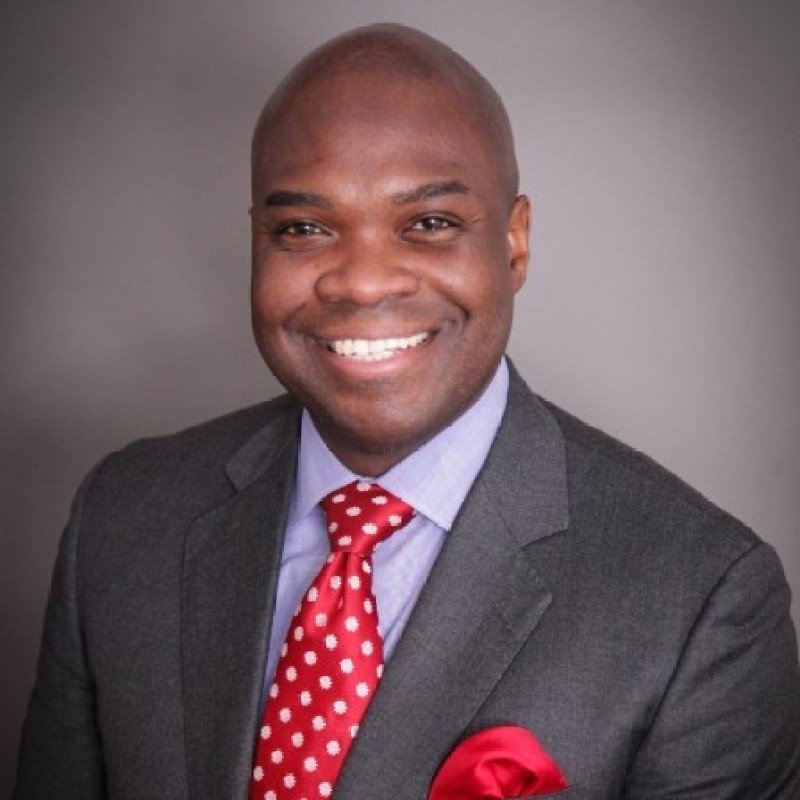
Patrick Howard
Founder & CEO, Crownbridge GlobalThree decades building the systems behind capital. One mandate now: putting them to work for founders.
Patrick began his career in 1993 inside the lending engines of major financial institutions, engineering the automated systems that moved capital at scale. In 1996 he was part of the team that brought one of the first end-to-end financial transaction systems online for a national retailer, and through the next decade he led financial technology and business development work for institutions including American Century Investments and Putnam Investments.
In 2005 he moved from building the pipes of finance to engineering the flow of capital itself, bringing applied economics to entrepreneurs through a Private Bank Strategy built on capital efficiency, cash flow velocity, and balance-sheet strength. A decade in private equity followed: performance-based financing structures, early revenue-share investing models, and a $10 million Regulation A+ offering structured to launch a newly public company, among the earliest of its kind.
Every chapter taught the same lesson: capital performs only as well as the architecture beneath it. Crownbridge Global, founded in 2023, is that lesson built into a firm: the infrastructure for the modern CFO mandate, so founders can build an aligned business model for their capital.
Business Management (Information Systems), with minors in Economics and Political Science, Tennessee Technological University.
Every engagement begins with ASSAY.
In a few weeks you will know where your business truly stands, what it is leaving on the table, when capital will run short, and where your journey begins.
We measure what we create. Every engagement reports the enterprise value it built, signed off by the founder.